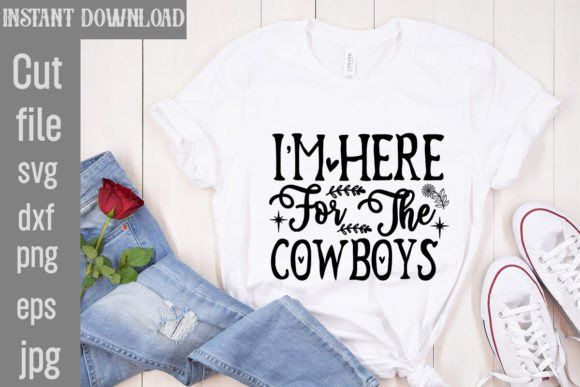
I m Here for the Cowboys SVG Cut File Review
As a designer who spends half my life staring at stitch density charts and the other half troubleshooting tension issues on vintage machines, I approach every new digital asset with a healthy dose of skepticism. The market is flooded with clip art masquerading as professional embroidery files, so when I m Here for the Cowboys SVG Cut File landed in my inbox, I didn’t just look at the preview image. I looked at how it would translate from a vector shape into thread on fabric.
This review isn’t about whether the file opens correctly in your software—though that’s step one—it’s about whether this design has the visual weight, clarity, and emotional resonance to survive the transition from screen to hoop. If you are an Etsy seller, a boutique owner, or a crafter looking to elevate your handmade products, here is my practical assessment of using this design in real-world scenarios.
First Impressions: Mood and Visual Personality
The phrase "I m Here for the Cowboys" carries a specific cultural weight. It suggests a blend of humor, regional pride, and casual confidence. Visually, designs that rely heavily on typography need to be robust. Thin, delicate fonts often unravel during stitching or get lost in the texture of heavier fabrics like denim or fleece. From what I can see in the vector layout, this design leans into bold, legible lettering, which is exactly what we want for a machine embroidery design intended for apparel.
The mood is undeniably playful yet grounded. It feels less like a formal statement and more like a conversation starter. This makes it ideal for custom apparel where the wearer wants to express personality without taking themselves too seriously. For a small business owner, this translates to high engagement potential. Customers don’t just buy a sweatshirt; they buy the attitude behind the text. When used correctly, this graphic becomes a brand asset that resonates with buyers who value authenticity and fun over minimalist perfection.
Real-World Application: Where This Design Shines
In my experience, not every graphic works on every surface. I m Here for the Cowboys SVG Cut File has distinct strengths that make it a versatile choice for several key product categories. Let’s break down where this design earns its keep.
- Sweatshirt Embroidery: This is perhaps the strongest use case. Heavy cotton or polyester blends provide a stable canvas for bold lettering. The contrast between the thread and the fabric will pop, ensuring the message is readable from across the room. It fits perfectly into the holiday embroidery niche, especially around football season or summer rodeo events.
- Tote Bag Design: Canvas tote bags are a staple for craft fairs and everyday use. A well-executed embroidered patch or direct-to-garment style text on a tote adds significant perceived value. This design works well centered on the front or stacked vertically on the side panel, creating a handmade product that feels curated rather than mass-produced.
- Baby Embroidery and Nursery Decor: While the tone is cheeky, the clean lines of the vector allow it to be scaled down effectively. On baby onesies or burp cloths, it serves as a unique gift option. Parents love personalized gifts that have a bit of edge but remain soft and safe. Just ensure you adjust the scale appropriately so the text remains legible on smaller garments.
- Applique Design Potential: Depending on how you digitize or cut this file, it could serve as a template for an applique project. Using a contrasting fabric background with a solid color foreground can add depth that pure thread work sometimes lacks. This is particularly effective for embroidered patches meant to be sewn onto denim jackets or backpacks.
Technical Considerations and Stitch Clarity
Translating a vector into a stitchable format requires careful planning. Because this is primarily a text-based graphic, the integrity of the letters is paramount. If the stitch density is too low, the underlying fabric may show through, ruining the crispness of the message. Conversely, if the density is too high, the fabric may pucker, especially on stretchy materials.
When preparing this for production, I recommend testing the design on scrap fabric first. Check the thread colors carefully against your base material. High contrast is your friend here; white or light gold thread on black denim, or navy blue on cream canvas, will ensure maximum readability. Also, inspect the corners of any curved letters or decorative elements. In complex typography, sharp corners can sometimes get rounded off by the needle’s movement if the underlay stitches aren’t programmed correctly.
If you are converting this into an applique design, pay close attention to the satin stitch borders. These edges need to be tight enough to cover the raw fabric edges but loose enough to prevent bubbling. For a standard fill stitch approach, ensure that the running stitch details (if any) are short enough to maintain definition but long enough to prevent thread breaks.
Where to Exercise Caution
Not every surface is created equal. There are specific scenarios where this design might struggle if not handled with care:
- Small Hoop Sizes: Avoid cramming this design into a 4x4 hoop unless you are willing to significantly reduce the scale. Tiny text loses impact and can become illegible after washing.
- Textured Fabrics: Materials like boucle, heavy tweed, or loosely woven linen can distort the stitch path. The uneven surface may cause the needle to deflect, leading to misaligned letters.
- Stretchy Knits: While possible, stretching fabrics require additional stabilizer support. Without proper backing, the hoop marks may remain visible, or the design may shift during stitching.
- Curved Surfaces: Applying this to caps or hats requires a curved hoop attachment and precise digitizing to account for the curvature. Flat-lay previews do not always translate accurately to three-dimensional objects.
Impact on Product Value and Brand Consistency
For the Etsy seller or small shop product creator, presentation is everything. A professionally executed embroidery job signals quality. When customers see that the letters are straight, the spacing is consistent, and the thread quality is high, their trust in your brand increases. They are more likely to leave positive reviews and return for future purchases.
This design also lends itself well to printable mockups. Before committing to physical production, create digital previews showing the design on various backgrounds. This helps you gauge how the design assets perform in different lighting conditions and on different color palettes. It allows you to offer a wider range of options to your clients without needing to photograph every single variation.
Final Verdict for the Creative Entrepreneur
I m Here for the Cowboys SVG Cut File is a solid addition to any library of graphics aimed at the lifestyle and apparel market. It balances humor with clear communication, making it suitable for a wide range of commercial embroidery projects. Whether you are creating a personalized gift for a client or stocking your own line of custom apparel, this design offers a strong visual foundation.
However, remember that the file is just the starting point. Your skill in choosing the right stabilizer, matching thread colors, and setting the correct machine parameters will determine the final success of the piece. Always test before you sell. Confirm your licensing terms if you plan to distribute this digitally or sell finished items commercially. By treating this design with the respect it deserves, you can create finished products that stand out in a crowded marketplace.
If you are ready to bring some cowboy charm to your next embroidery project, this file provides the structural clarity and thematic appeal needed to succeed. Just keep your needle sharp, your tension balanced, and your expectations realistic. Happy stitching.